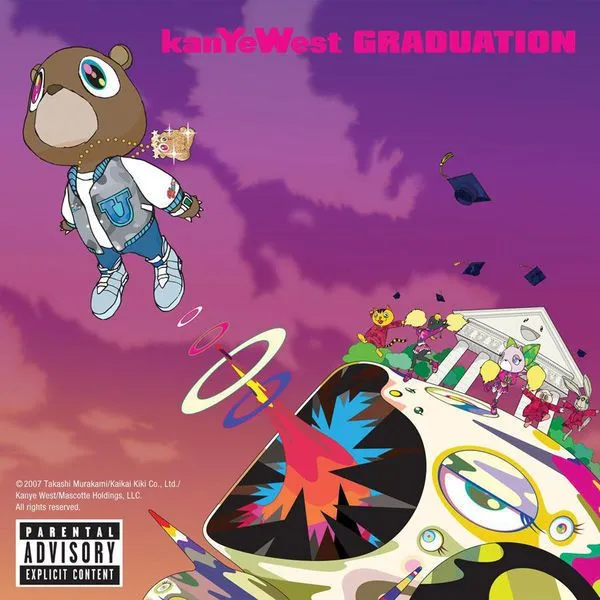
Kanye West’s Graduation is a defining hip-hop album - shifting the genre's trajectory in 2007 by moving away from soul samples toward arena-ready synth-pop and electronic influences.
Released on September 11, 2007, Graduation sold 957,000 copies in its first week, decisively winning a high-profile sales battle against 50 Cent’s Curtis. This commercial victory marked a cultural turning point where the street-focused gangsta rap of the mid-2000s gave way to the stadium-sized, introspective, and genre-bending production that dominates modern hip-hop.
The album’s influence extends far beyond mainstream charts. It fundamentally changed how producers sampled electronic music, specifically bringing filtered house and techno elements into mainstream rap. For those interested in how this legacy of hybrid sound persists, you can browse underground live music in Athens where experimental hip-hop producers continue to blur these genre lines in live performance.
Why Did Graduation Change the Sound of Hip-Hop?
The core innovation of Graduation was its embrace of the 'stadium rap' aesthetic. Kanye West, alongside producers like Jon Brion and DJ Toomp, moved away from the chipmunk-soul samples that defined his previous work, The College Dropout and Late Registration. Instead, the album leaned into 1980s-inspired synthesizers, rock percussion, and electronic textures.
This shift was most visible in the single 'Stronger.' By sampling Daft Punk’s 'Harder, Better, Faster, Stronger,' West bridged the gap between underground electronic music and top-tier rap. This sound design required complex programming rather than simple sample loops. It forced the entire industry to upgrade its technical standards. Today, producers who emulate this layering often find their way onto the lineups of the scene's most demanding venues; you can see the latest hip-hop and electronic crossover events in Berlin to experience how this synthesis has evolved.
How Did the 50 Cent Rivalry Define the Album’s Success?
The lead-up to the release of Graduation remains one of the most famous marketing moments in rap history. 50 Cent, the undisputed king of commercial hip-hop in 2005 and 2006, publicly engaged in a sales race with West, claiming he would retire if West outsold him. This rivalry galvanized the hip-hop community, forcing listeners to choose between the grit of G-Unit and the experimental pop-rap of G.O.O.D. Music.
West’s victory with Graduation was a referendum on the future of the genre. 50 Cent’s traditionalist approach struggled to match the energy of tracks like 'Can't Tell Me Nothing' or 'Flashing Lights.' The public showed a clear preference for experimentation over the established formula. This moment allowed artists like Kid Cudi, Drake, and later, the experimental scenes in cities like Amsterdam to thrive, as the rigid boundaries of what a rapper could sound like had effectively collapsed.
Does Graduation Still Hold Up Today?
Listening to Graduation in 2026 reveals that the production has aged remarkably well. While many 2007-era rap albums feel tethered to the specific limitations of their time, the heavy use of synths on 'Flashing Lights' or the stadium-rock drums on 'Can't Tell Me Nothing' sound intentional rather than dated. It serves as a blueprint for the maximalist production style now common in modern trap and drill.
The album lacks the raw, lo-fi charm of Kanye's earliest work, but it compensates with impeccable sequencing. Tracks flow with the precision of a club set rather than a collection of radio singles. It remains an essential listen for anyone trying to understand the DNA of modern rap production. If you want to dive deeper into the artists who continue to push these sonic boundaries, explore the current event scene in Bucharest, where global hip-hop influence meets local innovation.
Frequently Asked Questions
Why is Graduation considered one of Kanye West's best albums?
Graduation is frequently cited by critics and fans as a masterpiece because it successfully bridged the gap between underground hip-hop sensibilities and pop-star appeal. It refined the stadium-rap sound, utilized electronic sampling with unprecedented creativity, and consistently delivered high-concept production that influenced the trajectory of rap for the next decade.
What did Daft Punk do on Graduation?
Daft Punk provided the core sample for the track 'Stronger.' The duo allowed Kanye West to sample their 2001 hit 'Harder, Better, Faster, Stronger.' West recontextualized the robotic, electronic loops into a high-energy hip-hop anthem, which is widely credited with accelerating the mainstream adoption of electronic-rap fusion.
How many copies did Graduation sell in its first week?
Graduation sold 957,000 copies in its first week of release in the United States. This figure was significant not just for the volume of sales, but because it defeated 50 Cent’s album Curtis, which sold 691,000 copies in the same period, signaling a major cultural shift in hip-hop popularity.